Understanding Scorecards
How to interpret AI-generated scorecards and make informed hiring decisions.
After a candidate completes their interview, the AI scorer analyzes the full transcript and produces a scorecard. This process typically takes 10-30 seconds.
What's on a Scorecard
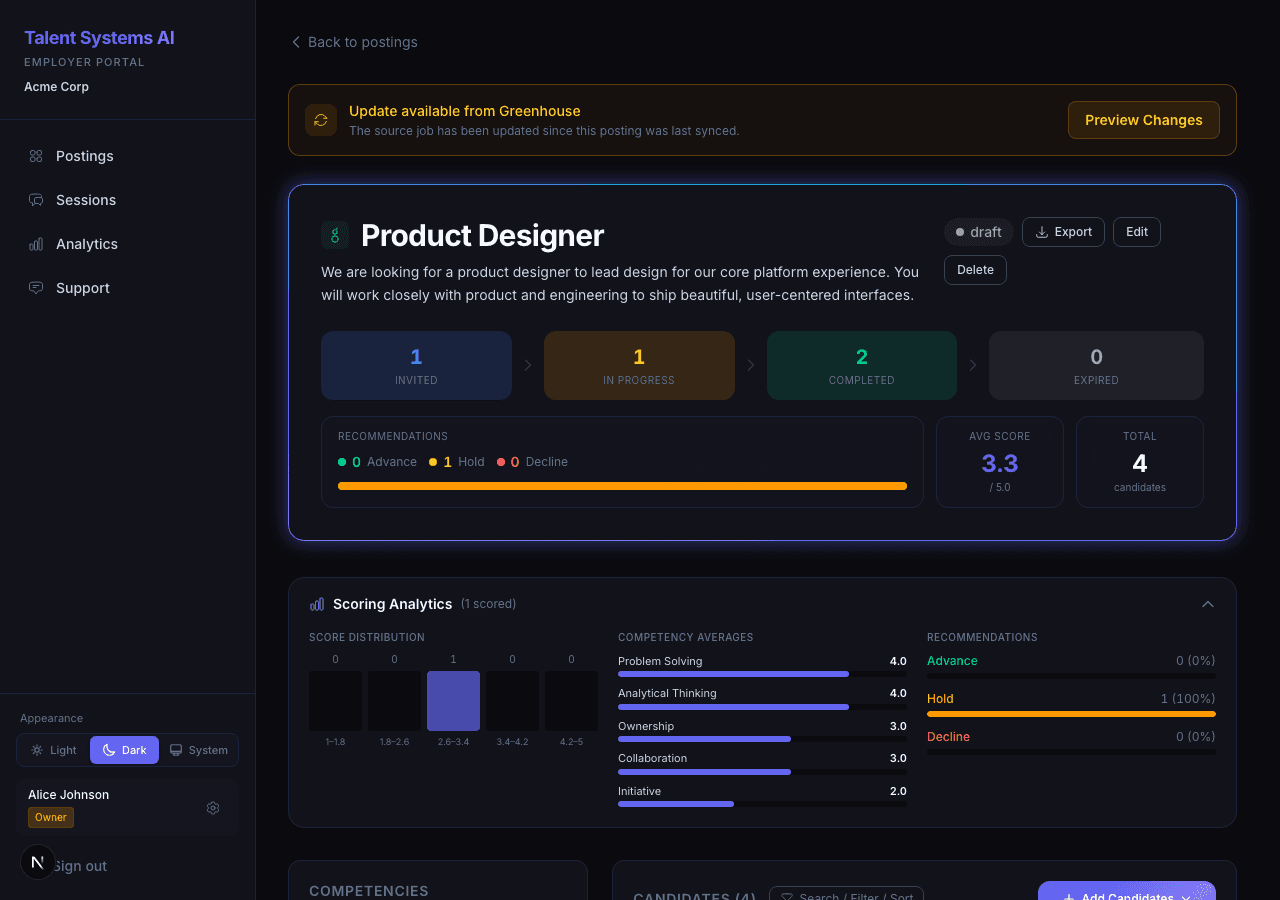
Each scorecard contains:
| Section | What It Shows |
|---|---|
| Overall Weighted Score | A single number combining all competency scores, weighted by your posting configuration |
| Recommendation | Advance, Hold, or Decline based on the scoring thresholds |
| Per-Competency Breakdown | Individual scores with supporting evidence, strengths, and concerns |
| Integrity Score | Assessment of the candidate's interview environment and behavior |
Per-Competency Scores
| Field | What It Tells You |
|---|---|
| Score (1-5) | How well the candidate demonstrated this competency against the behavioral anchors |
| Evidence | Direct quotes from the transcript supporting the score |
| Strengths | Specific things the candidate demonstrated well |
| Concerns | Areas where answers were weak, vague, or unclear |
Score Scale
| Score | Meaning |
|---|---|
| 5 | Exceptional — clear, specific evidence well above expectations with quantified impact |
| 4 | Strong — solid evidence meeting or exceeding expectations with good detail |
| 3 | Adequate — meets basic expectations but lacks depth or specificity |
| 2 | Below expectations — limited or vague evidence, generic or hypothetical responses |
| 1 | Insufficient — no meaningful evidence provided |
How Scoring Works
The scorer never sees the candidate's name, demographic information, or any identifying details. This is architectural — blind scoring cannot be disabled.
- Evidence-based — scores are derived from specific statements in the transcript, matched against the competency's behavioral anchors
- Consistent framework — the same anchors and rubric apply regardless of which interview style was used
- Weighted composition — your posting's competency weights determine how individual scores combine into the overall score
Scoring Status
| Status | What It Means |
|---|---|
| Spinner | Scorecard is being generated (usually 10-30 seconds) |
| Error + Retry button | AI couldn't produce a valid scorecard — rare, typically from a very short or empty transcript |
Red Flags
The scorer may identify red flags and display them as a red badge on the candidate row:
- No specific examples provided
- Single-project answers across all competencies
- Contradictions between different responses
- Signs of coached or rehearsed answers
Red flags don't automatically disqualify a candidate. They're signals for your team to investigate further — not automatic decisions.
Scorecard red flags are separate from integrity flags, which come from the live integrity monitor during the interview (e.g. tab switches or clipboard pastes) and show up as an amber Review pill on the candidate's row. See Reviewing Flagged Interviews.